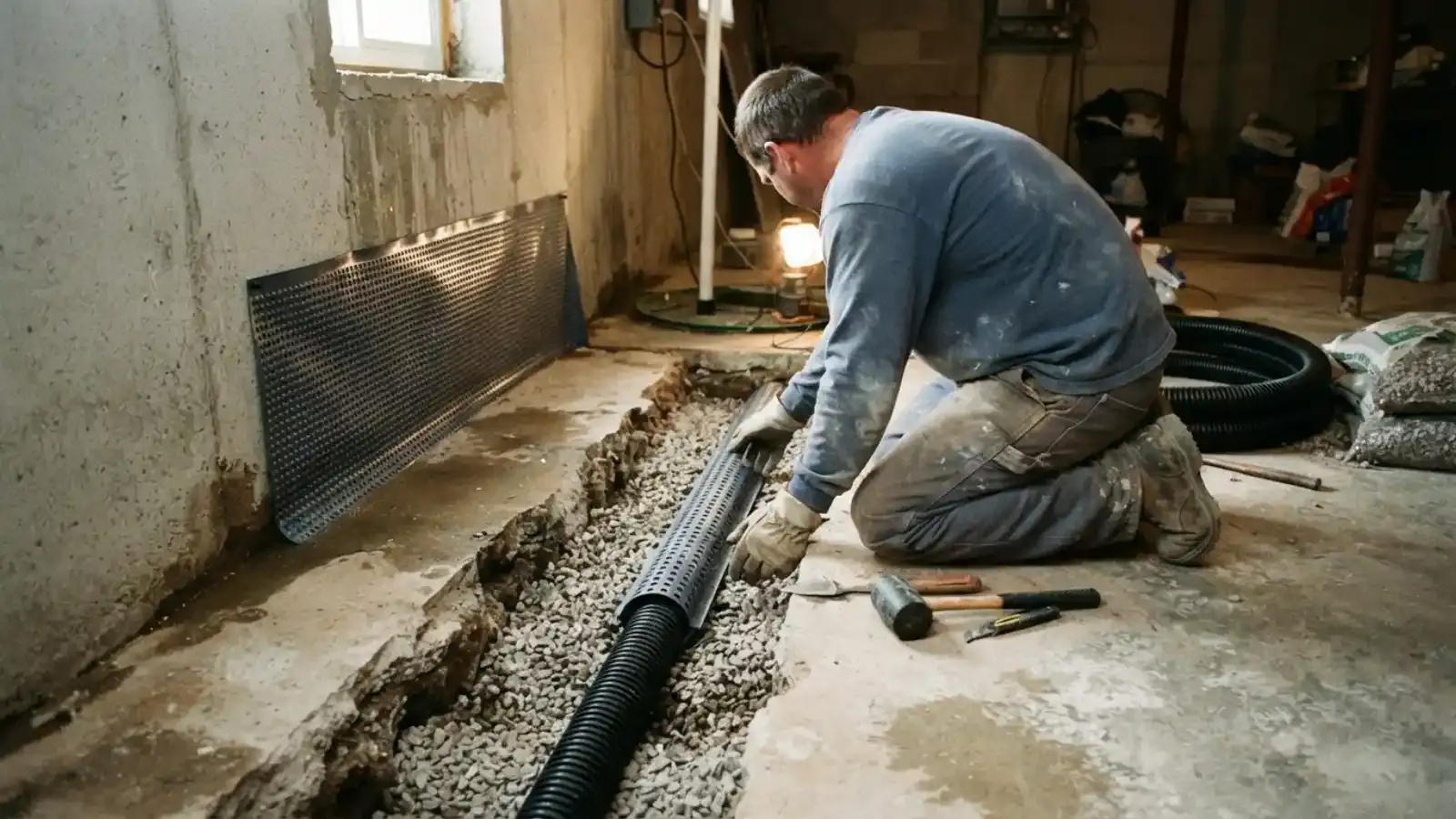
We are plumbers, so we handle the plumbing side of keeping a basement dry. That covers sump pits, interior drain tile connections, window well drains and sewer backflow protection. We will also tell you plainly when the job belongs to a foundation contractor.
Start by reading the water
Watch when it arrives. Water that shows up a day or two after a storm or a fast melt is usually groundwater pressing through the wall or the floor joint. Water that appears only when the washer drains or the shower runs is a plumbing problem. Water that rises from a floor drain after heavy use is a sewer backup.
A leak in a supply line or a drain pipe can mimic seepage, so we rule out plumbing first with a pressure test or a camera run. If the pipes are sound, the fix moves to drainage. For a hidden supply or drain leak, our leak detection service finds the source without opening walls blindly.
What a plumber handles and what a foundation contractor handles
| Problem | Plumber | Foundation contractor |
|---|---|---|
| Sump pit and pump | Yes | Sometimes installs drain tile |
| Interior drain tile tied to a pit | Connects and tests the discharge | Often cuts the slab and lays the tile |
| Window well drains | Yes, drain line and tie-in | Yes, well replacement |
| Sewer backflow into floor drains | Yes, backwater valve or line repair | No |
| Cracked or bowing foundation wall | No | Yes, often with an engineer |
| Exterior membrane and regrading | No | Yes |
If your walls are cracked, bowed or shifting, call a foundation contractor first. A pump does not stabilize a wall, and we would rather say so than sell you a pit.
Sump pits and interior drain tile
The standard interior system is a perimeter drain along the footing that carries water to a sump pit, where a pump lifts it out of the house. The plumbing work is the pit, the pump, the check valve and the discharge line. Our page on sump pump installation and repair covers pump choices, battery backup and how to tell a failing unit from a healthy one.
Interior tile manages water after it has reached the foundation. It does not stop water from reaching the wall. For many basements that is enough. For a home with recurring flooding, a contractor may recommend exterior work as well.
Window wells and downspouts
Window wells collect rain and snow against the foundation. If a well fills and drains slowly, water can push past the window frame. A plumber can run a drain from the bottom of the well to the footing drain or to daylight if the slope allows.
Downspouts that empty beside the house work against any interior system. Extending them away from the foundation is cheap, and it reduces the load on the pump. Because North Salt Lake’s footing frost depth is 30 inches, discharge pipe set shallow can freeze in winter, so we plan routes with that in mind.
Water on the basement floor today?
Call the 24/7 line. We will help you sort out whether it is a plumbing leak, a drain backup or groundwater.
Hillside homes east of Orchard Drive
Hillside growth in North Salt Lake began east of Orchard Drive around 1960, and many of those homes sit on sloped lots with cut foundations. Water on a slope moves downhill, and where a discharge line ends matters more than it does on flat ground.
The city says properties in sensitive lands, usually east of Highway 89, may need a Geo Hazard Review. The city also adopted a geologic-hazard ordinance in October 2015 after a landslide destroyed a home. Pumping water onto a hillside could cause problems, so before we lay out a discharge route on a sloped lot, call the Building Department at (801) 335-8720 and ask whether a review applies.
Sewer backflow in the basement
A basement floor drain sits lower than most of the system, so it is the first place a main line blockage shows up. A backwater valve installed on the house line closes when water tries to flow backward. It needs a permit, and it needs routine cleaning to work.
A valve does not clear a blockage. If the main line is clogged or collapsed, sewer line repair or a camera inspection is the first step. The South Davis Sewer District (801-295-3469) handles the public main, and we tell you which side of the property line the problem sits on.
Signs you should call about your basement
- Damp patches on the wall or floor that appear after rain or melt and dry out afterward.
- A musty smell that returns even after the basement has been aired out.
- White, chalky residue on concrete, which signals moisture moving through it.
- Water around the floor drain after heavy laundry or after a storm.
- A sump pit that fills quickly, runs often or stays full.
- Peeling paint or bubbling drywall at the base of the wall.
What affects the price
Four things move the number most. The length of drain tile to be laid, since cutting concrete is labor-heavy. The depth and number of pits. The discharge route and whether it needs trenching. And whether the permit, the sewer district or a Geo Hazard Review adds steps.
Homeowners policies usually cover sudden and accidental water damage. Seepage and groundwater are often excluded, so ask your insurer what is covered. We give you a clear price before work starts.
Frequently asked questions
A plumber handles the drainage and pumping side: sump pits, tile connections, window well drains and backflow protection. Wall cracks, structural movement and exterior membranes belong to a foundation contractor.
Timing is the clue. Water that follows a storm or melt is usually groundwater. Water that follows laundry or a shower is plumbing. We can confirm with a pressure test or a camera run.
Hillside lots can mean steeper discharge routes and possible Geo Hazard Review for sensitive lands. Call the Building Department before you plan a discharge line on a slope.
It removes water that collects in the pit. It does not stop water from reaching the foundation, and it needs power or a battery backup to run during a storm.
Yes. The line is answered 24/7. If water is rising, shut off the main water valve if you suspect a pipe, and turn off power to wet areas only if you can do so safely from a dry spot.
Yes, our Woods Cross dispatch covers it, and the sump and backflow work is the same.