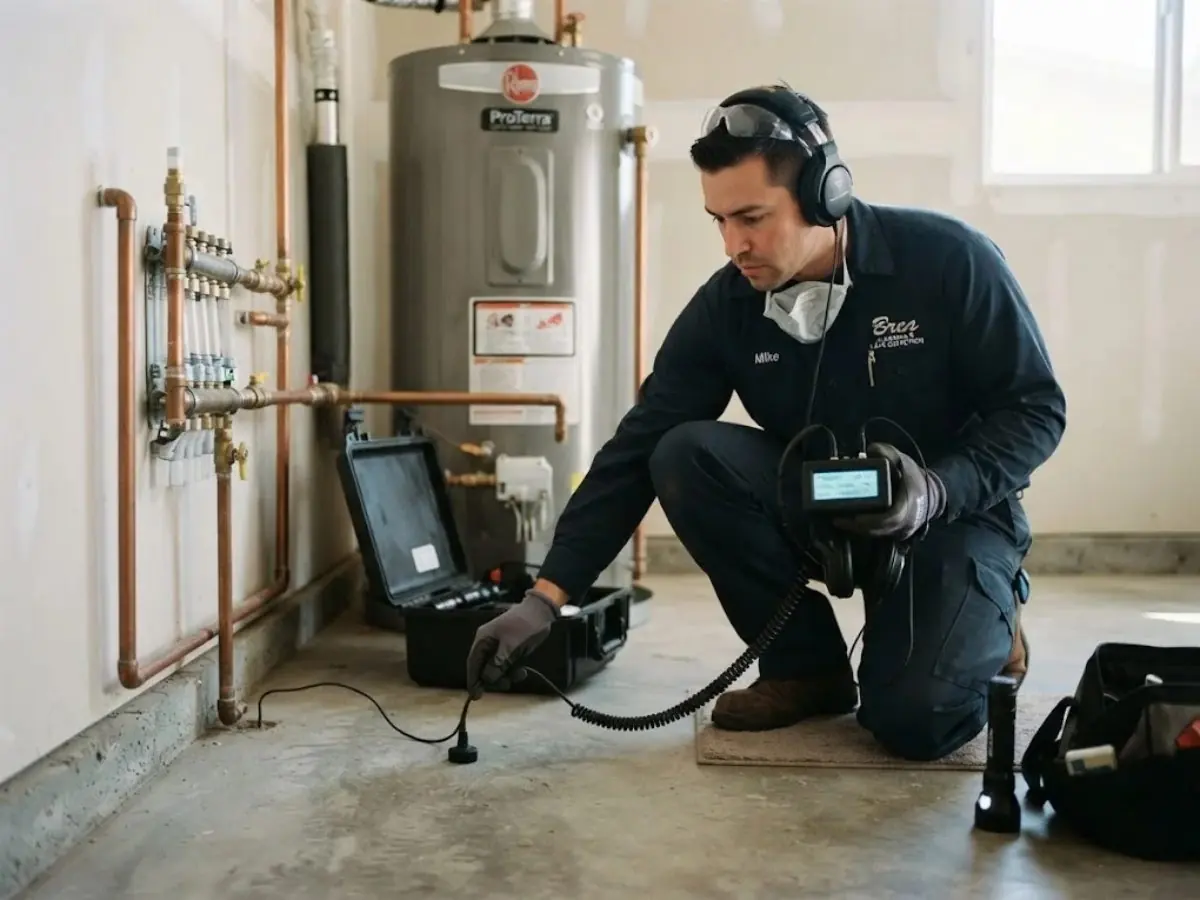
If water is dripping through a ceiling or pooling on a floor, shut off the main valve first and call. Nights, weekends and holidays are covered, and same-day appointments are available when the leak is slow and nothing is spreading. While you wait, move furniture off wet carpet and keep the power off to any outlet near the water.
The meter keeps moving and nobody is using water
A meter that spins with every tap closed is the plainest sign of a leak you cannot see. It also explains most of the calls that start with a high water bill rather than a puddle.
Run the test below once, with nothing running in the house. If the low-flow indicator keeps turning, water is escaping somewhere between the meter and the fixtures. The next question is whether it is inside the house or in the buried line, and a plumber answers that by closing the house side at the main valve and watching the meter again.
Do the meter test yourself in ten minutes
Stop all water use
Close every tap, stop the dishwasher and washer, and make sure no one flushes a toilet during the test.
Read the meter
Lift the lid, note the numbers and watch the small triangle or wheel that turns with even a thin flow.
Wait without touching anything
Check again after 30 to 60 minutes. Any change in the numbers means water is leaking.
Close the main and recheck
If the meter stops after you shut the home’s main valve, the leak is inside the house. If it keeps moving, suspect the line from the meter.
Reading a high water bill before you call
Compare your bill with the same month last year, since lawn watering and guests change use for ordinary reasons. Look at the units printed on the bill (gallons or cubic feet) so you are comparing like with like. A steady rise across two billing periods with the same habits usually points to a slow leak.
The most common culprit is a toilet flapper that no longer seals, which can run for days without a sound. Drop a few drops of food coloring in the tank and wait 15 minutes. If color reaches the bowl without flushing, the flapper is the leak. Our toilet repair page covers that fix. If the toilets pass and the meter still moves, the leak is in a pipe.
Stains, bubbles and drips in ceilings, walls and attics
A brown ring on a ceiling, paint that blisters, or a wall that feels cool and damp rarely sits directly under the source. Water follows framing and pipe sleeves before it shows itself, so the stain may be several feet from the break.
We use a moisture meter and a thermal camera to map the wet area, then isolate supply lines and drain lines one at a time with a pressure test.
If the stain only appears after someone showers upstairs, the drain or shower pan is a better suspect than a supply pipe. If it grows when no water is running, a pressurized supply line is leaking. Either way, dry the area quickly, because wet insulation and drywall can grow mold in a few days.
Leaks under the house and in the crawlspace
Many North Salt Lake homes sit on a crawlspace or a basement instead of a slab, which means supply and drain lines are often visible from below and a leak is easier to reach. Warning signs include a musty smell, a sagging section of insulation, damp soil under a pipe, or a floor that feels soft near a bathroom.
A plumber looks for drips along the joists, corroded fittings and wet insulation, then confirms with a pressure test on each branch. Standing water under the floor should be dried before it spreads. If the crawlspace repeatedly collects water from outside rather than from a pipe, that is a drainage issue, and a sump pump may belong in the plan.
Slab leaks: only in homes built on a slab
A slab leak is a break in a line that runs through or under a concrete slab floor. It can only happen in a slab-on-grade home, and plenty of homes here have a basement or crawlspace instead, so do not assume a damp floor means a slab leak.
If your house is on a slab, the signs are a warm spot on the floor, the sound of water running when nothing is on, a meter that moves, or carpet that stays wet. We pinpoint the spot with acoustic listening and thermal imaging, then explain the choices: cut the slab and repair the section, reroute the line through the attic or walls, or replace the run, which overlaps with repiping.
Underground and buried line leaks
Water lines run underground between the meter and the house, and a leak there can stay hidden for months. Wet or unusually green patches in the yard, a soft spot in the driveway, or low water pressure in the whole house are clues. Hearing a hiss near the meter box is another.
We use a pipe locator to trace the route, acoustic listening on the line and sometimes tracer gas to narrow the position before any digging. Local frost depth for footings is 30 inches per the city’s design criteria, so a properly buried line should sit below the freeze zone. A leak that appears after a hard freeze may mean the line sits too shallow. Repair and replacement options are covered under water line repair.
Water where it should not be?
Call the 24/7 line and say whether the meter is moving, where the stain is and whether the main is shut off.
What each detection method is good at
| Method | Best for | Limit |
|---|---|---|
| Acoustic listening | Pressurized lines in walls, slabs and yards | Quiet, slow leaks can be hard to hear |
| Thermal imaging | Warm lines, wet insulation, hot-water leaks | Shows temperature difference only |
| Pressure testing | Proving which line or branch is losing pressure | Needs the line isolated |
| Moisture meter | Mapping the wet area in drywall and wood | Does not locate the break itself |
| Tracer gas | Hard-to-hear buried or enclosed lines | Needs a sealed, accessible section |
| Pipe locator | Tracing where a buried line actually runs | Does not find the leak by itself |
Sprinkler, pool and yard-side leaks
Irrigation lines are the usual suspect when the meter moves only during the watering season. A broken head, a cracked valve or a damaged lateral can run unnoticed. Turn the sprinkler system off at its own valve and redo the meter test. If the movement stops, the irrigation side is the leak.
Most of the city’s secondary water is purchased from Weber Basin, which is a separate system from your culinary supply. Ask Public Works which line feeds your sprinklers before you assume.
Pool and spa leaks need a bucket test and pressure test of the plumbing lines, and we can check the supply and return pipes. We do not repair pool liners or shells.
A meter box full of water, or a wet spot around it, may mean the leak sits on the city side of the meter or on yours. Call Public Works at 801-335-8726 (after hours 801-560-3718) and ask before digging.
Emergency steps: limiting damage while you wait
- Shut off the main water valve, usually near where the line enters the house or in the basement.
- Turn off power to any room with standing water, using the breaker rather than a wet switch.
- Photograph the damage before you move anything, for your insurer.
- Move rugs, boxes and electronics out of the wet area.
- Open windows and run a fan if the area is dry enough to do so safely.
- Do not poke holes in a bulging ceiling unless water is pouring through, and then use a bucket.
What affects the price of finding a leak
We give you a clear price before work starts. Several things move it:
- How accessible the pipes are, since an open crawlspace is quicker than a finished wall.
- Whether the leak is inside, under a slab or buried in the yard.
- How many tests it takes to rule out other lines.
- Whether a camera or tracer gas is needed in addition to listening.
- The size of the repair once the leak is found.
Homeowners policies usually cover sudden and accidental damage, not slow leaks left unrepaired. Document the timeline and ask your insurer before repairs start.
Why minerals matter for leak hunting
The city’s 2024 water quality report lists total dissolved solids of 888 to 980 mg/L and recommends flushing a tap after the water has sat for hours. Minerals like these can build up in older fittings. If you see crusty white deposits at a joint, the fitting may be seeping, so tell the plumber where you saw them.
Standards behind a good leak test
Pressure testing and acoustic or thermal detection are common trade methods, and repairs that follow must meet the 2024 International Plumbing Code (IPC) that Utah adopts from July 1, 2026. A reading from a meter or a pressure gauge is only a starting point. We confirm the location with a second method before anyone opens a wall or digs.
Frequently asked questions
Yes. The 24/7 line is answered through nights, weekends and holidays. If water is spreading, shut off the main valve and tell the dispatcher what you can see, so the plumber brings the right equipment.
Run the ten-minute test above. If the meter still moves with the main valve closed, the leak is in the line before the house, and you should call. If it stops, the leak is inside, often a toilet or a pipe in a wall.
Only after the leak is pinpointed. We map the wet area first and cut the smallest opening that reaches the pipe. Repairing drywall after is a separate trade, and we will say so up front.
Often, yes. A pipe locator and listening gear narrow a buried leak to a few feet, so the excavation is small. Some leaks still need a trench, and we will explain the plan first.
Only homes built on a slab can have them. Many homes in this area have basements or crawlspaces, so a wet floor is more often a supply line, drain or foundation moisture problem.
The city supplies water through its own department and Weber Basin. If your meter registers a leak, the line on the house side is yours to fix. For questions about the meter itself, call Public Works at 801-335-8726.
Yes, see our commercial plumbing page. Large buildings take more time to isolate, so the first call is usually a scheduled visit.
Repairing a pipe often does not, but replacing or rerouting piping can. Plumbing permits go through the Building Department at 10 E Center Street, and we handle that when it is required. For a nearby town, see Woods Cross service.