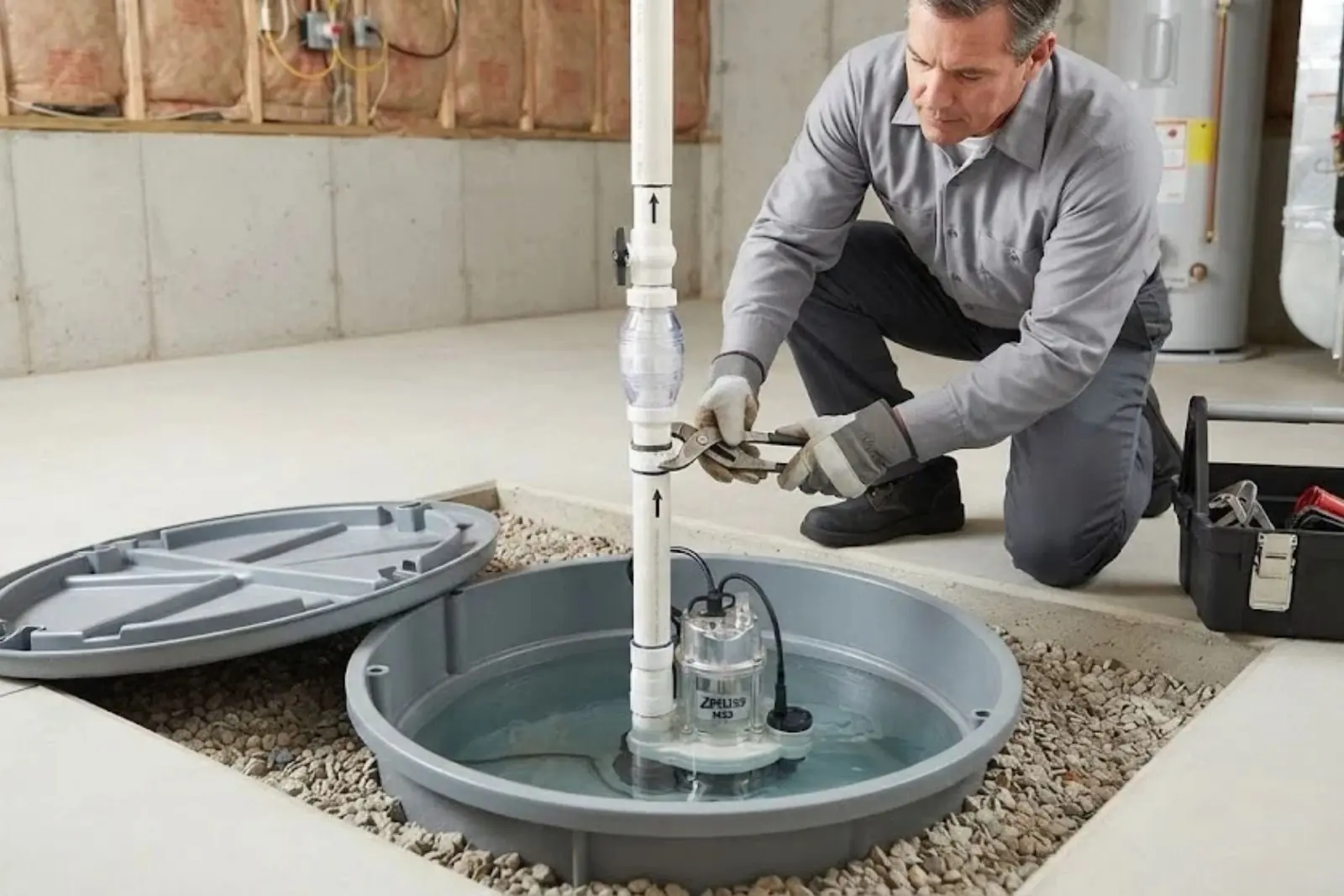
Our licensed plumbers install and service both sump pumps, which move groundwater or drain-tile water out of a pit, and sewage ejector pumps, which lift wastewater from a basement bathroom up to the sewer line. The two jobs look similar from the outside, but the parts, the pit lids and the rules are different.
Is it a sump pump or an ejector pump?
A sump pump handles clear water collected by drain tile or seeping up through the slab. An ejector pump handles toilet, shower and sink waste from fixtures that sit below the house sewer line. It sits in a sealed, vented basin and has to pass solids.
A sump pump put into an ejector job will clog on the first flush. An ejector put into a sump job costs more than it needs to.
Signs the pump is on its way out
- The pump runs constantly, even when the pit looks nearly empty, which often means a stuck float or a failed check valve.
- It hums but does not move water, which points to a seized motor or a jammed impeller.
- The pit fills and the pump never starts, so check the breaker, the GFCI outlet and the float before anything else.
- Water drains back into the pit after each cycle, so the pump restarts every minute or two.
- A basement bathroom gurgles, smells of sewage or drains slowly after the ejector runs.
Why a basement near the foothills still needs a plan for water
Whether a basement stays dry depends on the lot, so we do not assume every home needs a pump. What is documented is that Davis County saw more than 100 debris slides in the spring of 1983, driven by heavy snowmelt and runoff. The practical lesson is the one that applies to any foothill neighborhood: when a lot of water arrives at once, it needs a path away from the foundation.
If your basement has ever taken on water after a fast spring melt or a heavy storm, a sump pit tied into drain tile is the usual plumbing answer. If it has never been wet, a pump may not be needed at all, and we will say so. For cracked walls or exterior grading, see our notes on basement waterproofing and what a plumber can and cannot fix.
What a new installation involves
Assess the water
We find where water enters, how quickly the pit refills and whether drain tile already exists.
Set the pit
We cut the slab, set a liner at the right depth, and seat the pump on a solid base.
Pipe the discharge
We run discharge with a check valve to an approved outlet and keep it clear of the foundation.
Test and show you
We fill the pit, cycle the float, and show you the breaker, the alarm and how to test it yourself.
Battery backup and alarms
Storms that flood basements often knock out power, and that is exactly when a plain AC pump stops. A battery backup pump sits beside the main pump in the same pit and starts when the float rises and the main unit fails to respond. A water alarm adds a warning if the level climbs anyway.
Backup batteries wear out in a few years, so test the unit twice a year. A backup buys hours, not days.
Pit filling and the pump will not start?
Call the 24/7 line. We will tell you what to check at the breaker and float while a licensed plumber is scheduled.
Ejector pumps for basement bathrooms
A basement bathroom below the sewer line cannot drain by gravity, so an ejector basin collects waste and a pump lifts it. The basin must be sealed and vented, and the pump must pass solids. If you plan to add fixtures, the permit and the sewer connection rules apply, and our plumbing installation team handles the permit paperwork.
North Salt Lake’s Building Department issues plumbing permits at 10 E Center Street. The South Davis Sewer District also charges impact fees for added fixtures on a lateral, and the city permit does not cover that fee. If an ejector basin overflows or the house line is the real problem, sewer line repair may be the right next step.
Where the water goes matters
Where the discharge ends up is a local decision, not a plumber’s guess. Many sewer districts do not allow clear groundwater to enter the sanitary sewer because it overloads treatment, and sending it onto a neighbor’s property or a slope can cause its own damage. We do not state the rules for your lot. Call the city and the South Davis Sewer District (801-295-3469) before the discharge line is laid out, and we will pipe it as they direct.
What changes the price
| Factor | Why it matters |
|---|---|
| Pump type and horsepower | Ejector pumps and larger sump pumps cost more than a basic unit |
| Slab cutting and pit depth | Breaking concrete and digging takes labor and disposal |
| Discharge length and route | Longer runs need more pipe, fittings and a freeze-safe path |
| Battery backup and alarm | Adds parts and a second set of wiring |
| Permit and sewer connection | Applies to ejector systems and added fixtures |
Homeowners insurance often covers sudden and accidental damage but excludes seepage and groundwater. Ask your insurer whether a water backup endorsement is on your policy. We give you a clear price before work starts.
Code points for sump and ejector work
Sump and ejector installations are governed by the Utah plumbing code, the 2024 International Plumbing Code (IPC) from July 1, 2026, covering the pit, check valve, vent and discharge route. Where the discharge ends is a local question, so confirm it with the Building Department before any pump is wired in.
Frequently asked questions
It depends on your lot, not the town. A basement that has taken on water, or a home with drain tile and a pit, is a candidate. We can look at the basement and tell you honestly if a pump is warranted.
Many last around seven to ten years, though heavy use shortens that. If yours is older and has never been tested, replace it before a wet spring rather than after.
Yes. We install the sealed basin, vent, pump and check valve, and we pull the permit with the Building Department. The South Davis Sewer District may charge impact fees for added fixtures, so ask early.
Check with the city and the South Davis Sewer District before choosing. We do not guess at the rules. We run the line as the local rules allow, away from the foundation and neighbors.
Yes. The line is answered 24/7. Tell us the water level and whether the pump hums, and we will schedule the earliest available plumber.
Yes. Our Woods Cross dispatch uses the same crews and the same pump options.