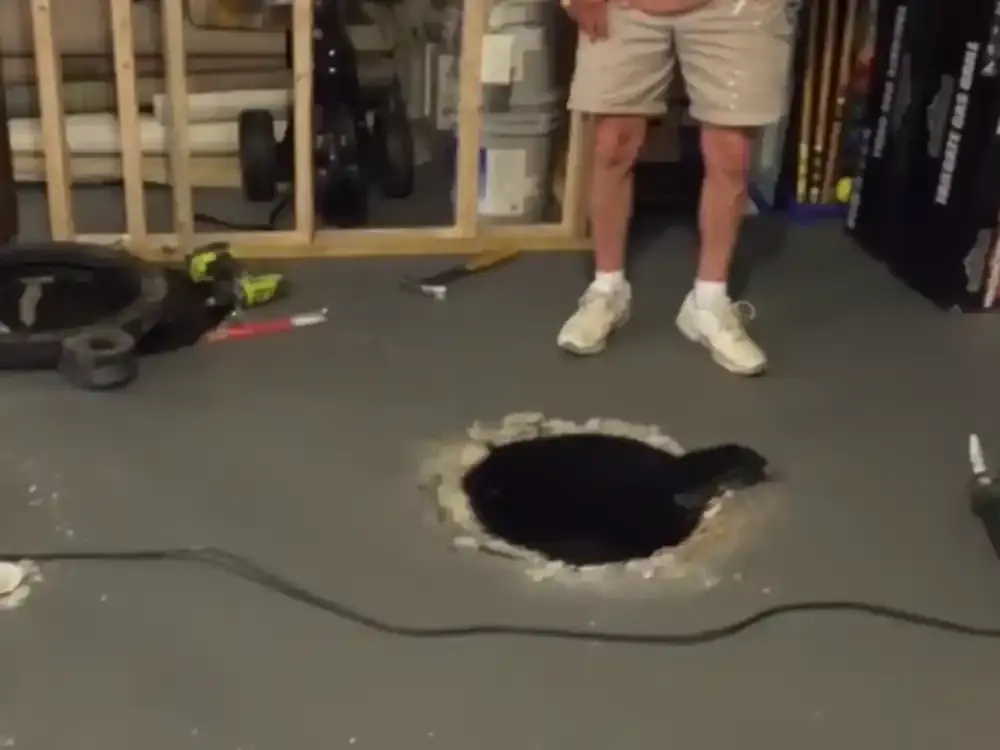
In Utah, adding a first-time fixture is not work a homeowner may do without a license, and it needs a permit. This guide shows the three setups, how to choose, and who to call.
Gravity, upflush or ejector: the decision
The deciding factor is the height of your house drain relative to the basement floor. Your plumber can measure this at the cleanout or where the main drain leaves the house.
| Setup | How it works | Best when | Watch for |
|---|---|---|---|
| Gravity drain | Slab is cut and a drain slopes to the main line | The basement floor sits above the main drain with enough fall | Slab cutting, dust, and the need for a vent |
| Upflush (macerator) | A unit behind the toilet grinds waste and pushes it up a small pipe | One bathroom, no slab cutting wanted, or tight ceiling runs | Noise, a wear part, and a limit on what can be flushed |
| Ejector pit | A sealed, vented basin in the floor with a pump | A full bath or several fixtures below the main drain | Slab cutting, a vent, power and an alarm |
What happens before any fixture goes in
Check the drain depth
A plumber finds where the main drain leaves the house and how far down the basement floor sits.
Check the vent
Every toilet needs a vent path, and an ejector basin needs its own vent.
Pick the setup
Fall decides gravity versus lift, and the budget decides between upflush and a pit.
Pull permits
The city plumbing permit and the sewer district steps come before the first pipe goes in.
When a macerating toilet makes sense
An upflush unit sits behind or beside the toilet and grinds waste with an electric blade. A small discharge line, much narrower than the 3-inch drain a gravity toilet needs, carries it up and across to your existing drain. It can run through a wall or ceiling, which is why people choose it for basements with no slab to cut.
The trade-offs are practical. It needs power, it makes noise when it runs, and it should only receive what the maker allows. Wipes and feminine products belong in the trash. Look for a model that also accepts a sink or shower if you want a small bathroom.
This Old House’s guide to below-grade toilets covers the macerator route in detail, including the steps of mounting the toilet with lag screws since there is no closet flange. It does not cover permits or ejector systems, so those still fall to your local rules.
When an ejector pit is the better choice
For a full bathroom with a toilet, sink and shower, an ejector pit usually works better. A sealed basin collects waste from all three, and a pump lifts it to the drain. The basin lid is gasketed and vented so sewer gas does not reach the room.
It needs a floor cut for the pit, a dedicated outlet and, ideally, a high-water alarm. Plan for the pump to be replaced eventually. Buy a unit sized for solids, and ask your plumber where the check valve and shutoff will sit so service is easy.
Planning a basement bathroom?
Call and describe where the toilet would go and where your main drain leaves the house. We will tell you which option is realistic.
Basement toilet permits and fees in North Salt Lake
Plumbing permits here go through the Building Department at 10 E Center Street, using the City Inspect portal. Plumbing permits generally skip plan review. The over-the-counter fee is $50.50, and inspections run Monday through Thursday, so you want a plumber who can schedule rough-in and final around those days.
Adding a fixture can also trigger sewer district steps. The South Davis Sewer District (801-295-3469, 1800 W 1200 N in West Bountiful) requires impact fees before a new lateral or added fixtures, and the city permit does not include that fee. Call the district before you hire anyone so the total is not a surprise.
Utah’s homeowner exemption is narrow: installing a fixture for the first time and changing existing piping are not exempt. Check the Building Department and the state Division of Occupational and Professional Licensing (DOPL), and hire a licensed plumber. The license lookup is at secure.utah.gov/llv/search/index.html.
Housing era and what it means for your basement
The city’s 2013 General Plan puts the first wave of homes between about 1910 and 1960, west of Orchard Drive and east of Main Street. Basements there may have older cast iron or clay drains and shallow floors. A camera run before you cut the slab shows whether the drain you plan to tie into is sound.
Hillside homes east of Orchard Drive were built from about 1960 onward. Sloped lots can put a basement bathroom above the street sewer, which favors gravity. Newer homes such as those in Foxboro, built between 2000 and 2010, are the ones most likely to have a rough-in stubbed in, so look for a capped drain in the floor before assuming you need to cut a new one.
Questions to settle before you hire
- Where does the main drain leave the house, and how far below the basement floor is the toilet outlet?
- Is a vent path available, or can a new one be run?
- Will the setup serve only a toilet or a full bath?
- Who pulls the permit, and who calls the sewer district?
- Can you reach the pump or macerator for service later?
Neighbors in Centerville and Bountiful often ask the same questions, and the same steps apply there with their own city permit offices.
For new fixtures the right starting point is our plumbing installation page. If your basement has had backups or a smell, a sewer inspection should come before any new fixture is tied in.
Code points to confirm before you start
A below-grade toilet is installed to the Utah plumbing code, the International Plumbing Code (IPC), and the ejector or sewage pump, the vent and the discharge route should be confirmed with the Building Department. Switch off power to any existing pump and avoid contact with sewage. Wear gloves and wash well afterward.
Frequently asked questions
The state’s homeowner exemption is narrow. Installing a fixture for the first time and altering existing piping are not exempt. Check with the Building Department and DOPL, and expect to hire a licensed plumber.
Yes, plan on a plumbing permit through the Building Department at 10 E Center Street. It is $50.50 over the counter and typically has no plan review. The sewer district may also have fees.
For one bathroom, it works well. It uses power, makes a noise when it runs and needs the right flushing habits. It is not a swap for a gravity toilet in every case.
Yes. A toilet needs a vent path so it drains without gurgling, and an ejector basin has its own vent. Your plumber and the inspector confirm the layout.
A plumber checks the drain depth at the cleanout and compares it to the basement floor. If the main leaves the house above the floor level, you will need a lift of some kind.
It can. The South Davis Sewer District requires impact fees before added fixtures go in, separate from the city permit. Call 801-295-3469 to confirm what applies to your project.