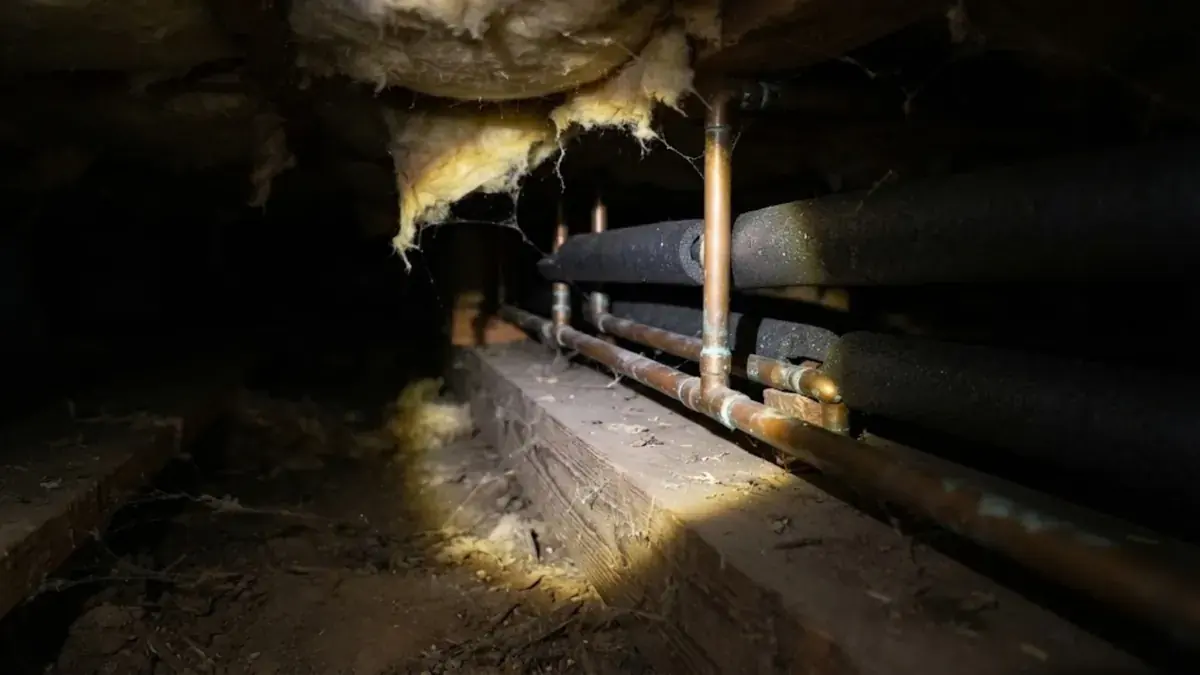
First prove you have a water problem. A pump is a response to water you can see, not a standard crawl space add-on, so find the source before you dig.
Is a sump pump what you need?
Look for evidence before you buy anything. Standing water after rain or snowmelt, dark stains on the soil or footing, wet insulation and a musty smell all point to water entering. A damp crawl space with no standing water may need a vapor barrier, grading or gutters instead.
Check outside first. Downspouts that empty near the foundation, soil that slopes toward the house and a leaking water line all put water under a house. A plumber can rule out a supply or drain leak with a pressure test, which is a cheaper fix than a pump. Our leak detection service handles that check.
The parts you will need
A crawl space sump pump system has more than a pump. Plan for the whole set.
| Part | What it does | What to check |
|---|---|---|
| Basin (pit liner) | Collects water at the low spot | Size, a sturdy base and a lid that seals |
| Pump | Moves water out | Submersible with a float that moves freely |
| Check valve | Stops water running back into the pit | Installed on the discharge, direction arrow correct |
| Discharge pipe | Carries water away from the house | Sloped, with a safe outlet |
| Cover | Keeps soil gases and moisture out of the home | Gasketed and fastened |
| Power and alarm | Runs the pump and warns if it fails | GFCI outlet and a water alarm |
Installation steps
Pick the low spot
Place the pit at the lowest point near a wall, close to an outlet, with clear access for service.
Dig and set the basin
Dig the hole a few inches deeper and wider than the liner, add gravel, and set the liner level.
Install the pump
Set the pump on a stable base, connect the discharge with a check valve and test the float.
Run the discharge and seal
Route the pipe outdoors away from the foundation, then seal the cover and the vapor barrier edge.
Where the water goes
The discharge is the part most people get wrong. The Building America Solution Center at Pacific Northwest National Laboratory advises sending the discharge to a storm sewer if local rules allow it, or to a dry well away from the foundation. Dumping it next to the house recirculates the same water right back into the soil under you.
Do not connect a sump discharge to the household sewer. Ask the South Davis Sewer District before you assume any tie-in is allowed, because the district runs the sanitary sewer here. The city publishes a Storm Standards Manual 2025 on its website, which is the right place to start for what happens to storm water.
Winter matters. City design criteria use a 30-inch footing frost depth and an 8 F winter design temperature. A discharge line that sits above ground in January can freeze solid, so bury it below frost where possible or use an outlet that can drain.
Want a crawl space sump pump planned?
Call and describe the water and the crawl space access. A licensed plumber can recommend a basin location and discharge route.
Sealing the crawl space
- Caulk the liner edge where it meets a concrete floor.
- On a dirt floor with polyethylene, extend the plastic over the ground around the pit and tape it to the liner rim.
- Use a gasketed cover that is fastened down.
- Seal wire and pipe penetrations through the cover.
- Confirm the lid keeps soil gases such as radon out of the living space.
- Check that the float can move without touching the walls.
The PNNL guide notes that a sump pump alone may not solve moisture in every crawl space. A vapor barrier, drainage at the roof and grading may still be needed. If you have recurring water, basement waterproofing may be part of the answer.
Permits, power and who should do the work
Plumbing permits in North Salt Lake go through the Building Department at 10 E Center Street, using the City Inspect portal. The over-the-counter fee is $50.50, plumbing permits generally skip plan review, and inspections run Monday through Thursday. Ask the department whether your pump and discharge line need a permit.
Utah limits what homeowners may do themselves. Installing a new fixture or altering existing piping is outside the homeowner exemption, so check with the Building Department and DOPL. The pump needs a GFCI-protected outlet, and any new wiring should be done by a licensed electrician.
Properties in sensitive lands, usually east of Highway 89, may need a Geo Hazard Review. If your lot is on the hillside, ask the Building Department before you dig a pit, because grading and drainage changes can matter there.
Older homes versus newer ones
The city’s General Plan puts the first wave of homes between about 1910 and 1960, west of Orchard Drive and east of Main Street. Crawl spaces in older houses often have dirt floors, old foundations and little insulation. Digging a pit there may mean working around footing steps or old piping, so a camera or a walk-through helps.
Foxboro was built from 2000 to 2010, so its pipes are newer and an old-pipe leak is less likely. Check drainage and grading first there. Homes in Bountiful and Woods Cross vary by neighborhood, so inspect your own crawl space instead of assuming.
What changes the price
- Access: a tight crawl space slows every step.
- Floor type: concrete costs more to cut than dirt.
- Discharge distance and whether the pipe must be buried.
- Pump type, with a battery backup adding cost.
- Whether electrical work or vapor barrier repair is also needed.
Homeowners insurance usually pays for sudden and accidental water damage, not groundwater seepage. Water backup coverage is a separate endorsement. Ask your insurer before you rely on it.
Frequently asked questions
Only if water collects there. Standing water, soaked insulation or repeated damp soil point to the need. A dry crawl space with a musty smell may need a vapor barrier or better grading instead.
Away from the foundation, to a storm sewer if allowed, or a dry well. Do not discharge next to the house, and do not tie into the household sewer without checking with the South Davis Sewer District.
Utah limits homeowner plumbing work. Adding fixtures or altering piping is outside the homeowner exemption. Call the Building Department and DOPL before you start.
Yes. It stops water on the discharge line from running back into the pit when the pump shuts off, which saves wear on the pump.
It can. City design criteria list a 30-inch frost depth and an 8 F winter design temperature. Bury the line below frost where possible, or slope it so it empties.
We did not find a city rule specific to sump discharge. The city has a Storm Standards Manual 2025, and the Building Department can tell you what applies to your property.